
Medication Reminders That Actually Work: A Guide for Caregivers
According to the World Health Organization, non-adherence to medication is responsible for approximately 125,000 deaths per year in the United States alone — and accounts for 10% of all hospitalizations. The problem isn't just forgetting; it's the cascade of consequences when someone with a chronic condition skips a dose, then another, then stops altogether.
As a caregiver, you know this pressure intimately. You worry. You call to check. You lose sleep. The good news: the right reminder system dramatically improves adherence — and it doesn't require an expensive smart-pill dispenser or a full-time aide.
Why Most Reminder Systems Fail
Generic alarm apps are anonymous. A buzz at 8am labeled "Medication" is easy to dismiss, snooze, or forget you ever saw. Especially for older adults, generic digital prompts lack the social weight needed to motivate action.
The systems that work share two characteristics: they feel personal, and they create accountability. Your loved one is more likely to take their medication when they know you'll see whether they acknowledged the reminder.
Building an Effective Medication Reminder System
- Record, don't type. A voice reminder in your own voice carries emotional weight that text cannot. "Mum, it's time for your heart pill. The white one. Love you." is infinitely more effective than "MEDICATION REMINDER."
- Be specific in your recording. Name the medication, describe it if needed ("the small blue pill"), and mention what it's for if appropriate.
- Time it precisely. Medications often need to be taken with or without food, at specific intervals. Schedule the reminder 10 minutes after a habitual meal to create a reliable trigger.
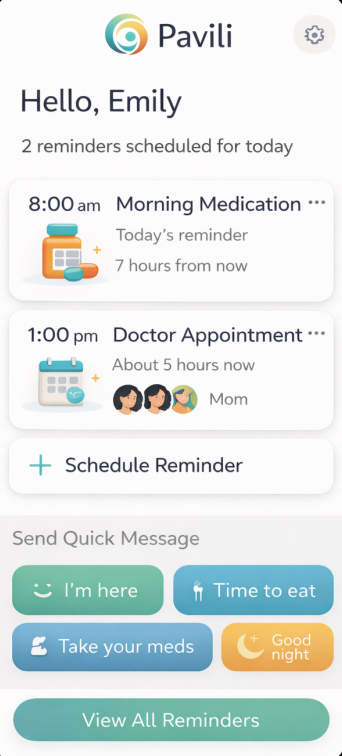
- Set follow-up logic. If they don't respond within 15 minutes, an automatic second reminder plays. This removes the burden of you having to manually check and call.
- Track acknowledgments. Seeing a pattern of non-response is itself valuable clinical information you can share with their doctor.
What to Do When Reminders Aren't Enough
Reminder systems are not a substitute for medical care. If your loved one is repeatedly missing medications despite reminders, this should be discussed with their physician. There may be side effects causing avoidance, cognitive barriers, or swallowing difficulties that need professional attention.
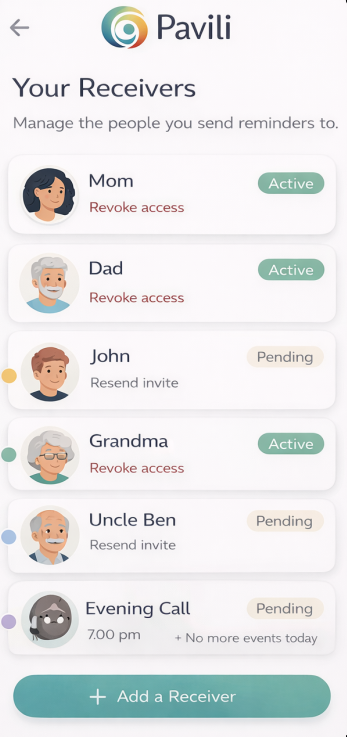
Pavili's acknowledgment tracking gives you an objective record — not just your impression — of patterns over time. That data is genuinely useful in medical conversations.